How Richard Sellmer Invented the Printed Advent Calendar
In the ruins of post-war Stuttgart, one man's childhood memory sparked a tradition that would reach millions of homes worldwide.
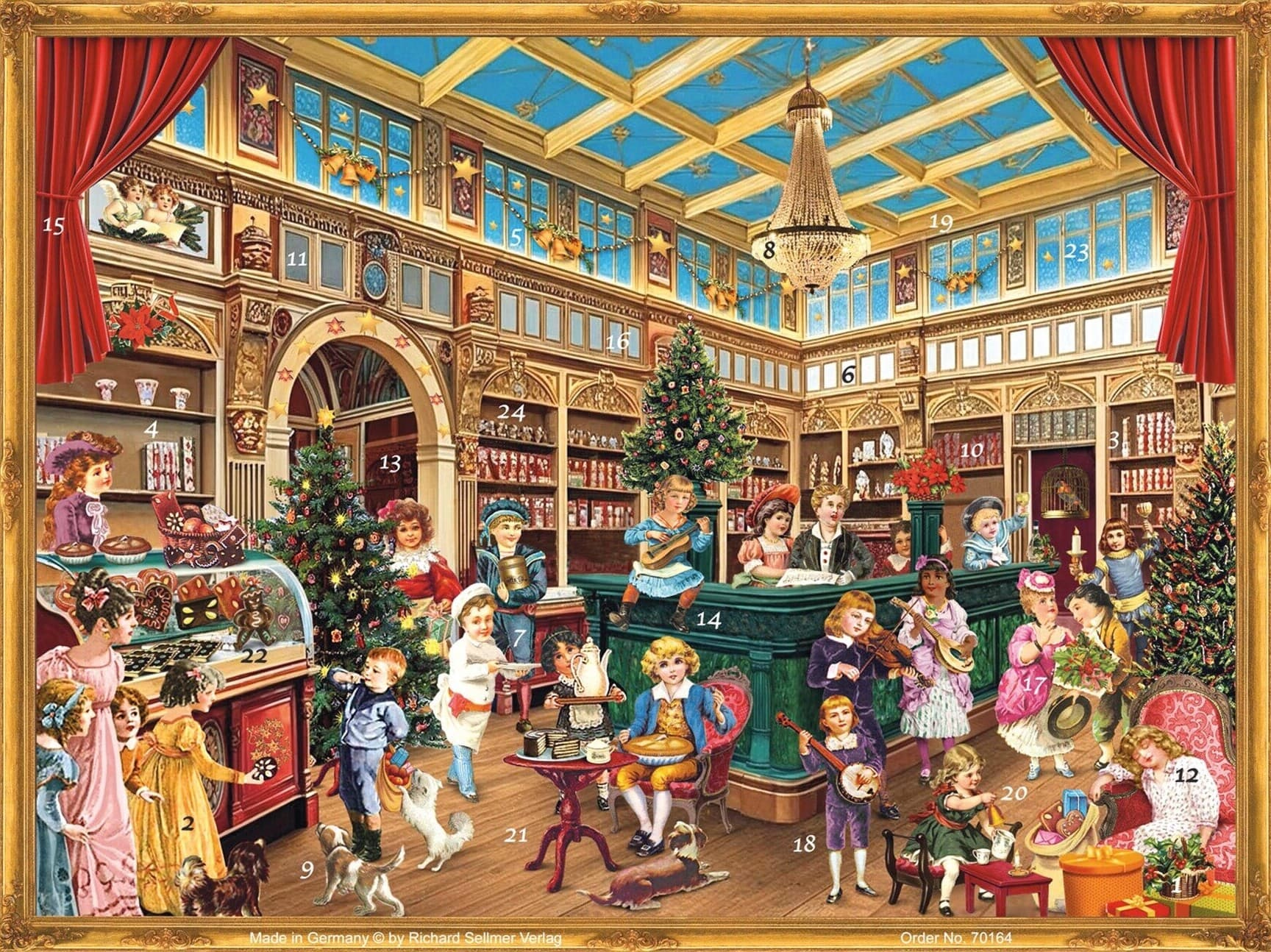
A Childhood Memory in the Rubble
Stuttgart, 1945. The war was over, but the city lay in ruins. Over half of its buildings had been destroyed by Allied bombing raids. Amid the rubble and reconstruction, a young printer named Richard Sellmer found himself thinking about Christmas — specifically, about a simple tradition from his childhood that had all but disappeared.
As a boy growing up in Swabia, Richard remembered his mother drawing chalk lines on the door frame each December, one for every day until Christmas. Some families used candles. Others pinned small pictures to the wall. These were the earliest "advent calendars" — informal, handmade, and deeply personal. The tradition had roots stretching back to 19th-century German Lutheran households, where families lit candles or marked off days with chalk to count down to the Nativity.
But the war had swept all of that away. Richard Sellmer wanted to bring it back — not as chalk marks on a doorframe, but as something beautiful, printed, and shareable.
The First Printed Calendar
In 1946, from a small printing workshop on Schmellbachstraße in Stuttgart, Sellmer produced his first advent calendar. It was a simple design: a winter village scene with 24 small windows that could be opened to reveal festive images underneath. No chocolate, no toys — just the magic of opening a tiny door each morning and discovering the picture behind it.
The concept was not entirely new. A few printed advent calendars had existed before the war — notably from the Munich publisher Reichhold & Lang in the early 1900s. But those had been luxury items for the wealthy. Sellmer's innovation was accessibility. He printed affordable calendars that any family could buy, and he timed his launch perfectly: post-war Germany was desperate for normalcy, for small joys, for traditions that connected the present to a gentler past.
The calendars sold immediately. By 1950, Sellmer was exporting to England and Scandinavia. By 1953, a chance encounter changed everything.
Eisenhower and the American Market
In December 1953, a photograph appeared in a widely circulated American newspaper showing President Dwight D. Eisenhower's grandchildren opening a Sellmer advent calendar in the White House. The image captivated American readers. What was this charming German tradition? Where could they get one?
Orders flooded in. Richard Sellmer Verlag began shipping calendars across the Atlantic, and the advent calendar entered American culture — not as a German curiosity, but as a beloved Christmas staple. The tradition spread to France, Italy, Japan, and beyond. Today, the advent calendar is one of Germany's most successful cultural exports, and it all started in that Stuttgart workshop.
80 Years of Tradition
Richard Sellmer Verlag is still family-owned, still based in Stuttgart, and still producing every calendar in the same city where it all began. The company now offers over 130 designs — from the classic winter village scenes that Richard first printed in 1946 to panoramic landscapes, Victorian parlors, and religious nativity scenes.
What hasn't changed is the philosophy: a beautiful printed image, 24 doors to open, and the daily anticipation of Christmas. No batteries required. No screens. Just paper, ink, and the oldest kind of magic — counting the days until something wonderful arrives.
Richard Sellmer Verlag has been producing advent calendars in Stuttgart since 1946 — making it the world's oldest continuously operating printed advent calendar publisher.