From Paper to Magic: How a Sellmer Calendar Is Made
Behind every tiny door is a process that blends 80 years of printing expertise with a commitment to sustainable materials.
It Starts with the Art
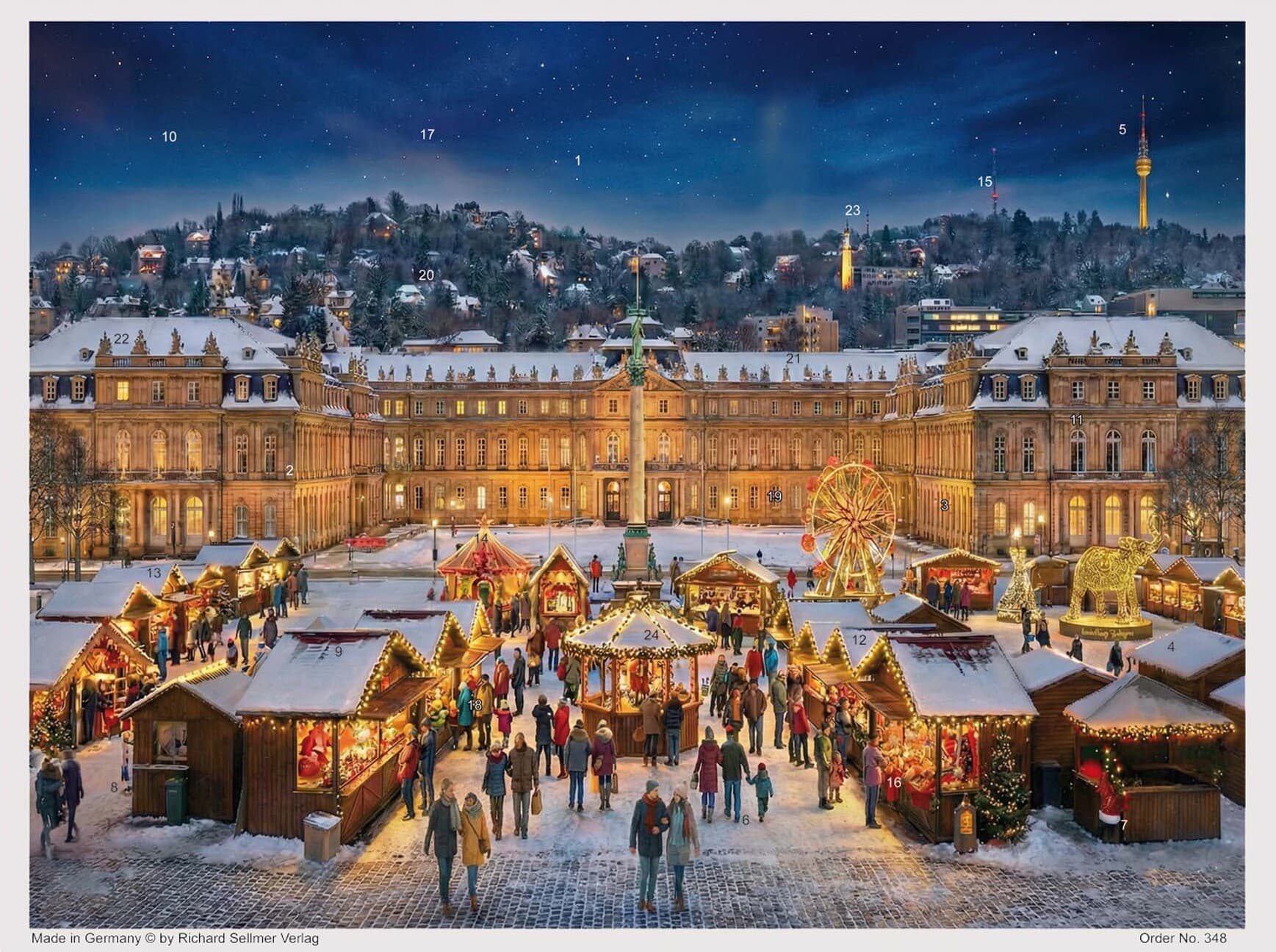
Every Sellmer advent calendar begins as an illustration. The company maintains an archive of over 130 original designs, some dating back to the 1940s and 1950s. New designs are created by contemporary artists who work in the traditional style — richly detailed scenes painted by hand, then scanned at high resolution for printing. The goal is always the same: when a child opens a door, the image behind it should feel like a small gift.
The artistic process takes months. A single panorama calendar design might contain over 200 individual elements — buildings, trees, people, animals, snowflakes — each placed to create depth and tell a visual story. The 24 "door" positions must be carefully planned so that each reveals a satisfying image while maintaining the overall composition.
Printing and Die-Cutting
The printing takes place in Stuttgart using modern offset lithography on high-quality art paper. Each calendar is printed in multiple passes to achieve the rich, saturated colors that Sellmer calendars are known for. The company uses vegetable-based inks and FSC-certified paper sourced from sustainably managed forests.
The die-cutting is where the magic happens. Precision cutting machines score the 24 doors into the front layer so they can be opened cleanly without tearing. The front and back layers are then aligned and glued together with a tolerance of less than a millimeter. When you open door number 7, you see exactly the image that the artist intended — not a sliver of door number 8.
The Glitter Question
If you've ever held a Sellmer calendar, you've noticed the glitter. It catches the light, making snowy rooftops sparkle and angel wings shimmer. Since 2019, Sellmer has used only biodegradable glitter made from plant-based cellulose. It looks identical to traditional plastic glitter but breaks down naturally in compost. It's a small detail, but it reflects the company's broader commitment: honor the tradition, but don't harm the planet doing it.
Quality Control by Hand
Every calendar passes through a manual quality check before it's packaged. Workers inspect the alignment of doors, the accuracy of colors, and the clean cutting of each window. Calendars that don't meet the standard are pulled from the line. It's a level of craftsmanship that mass-market producers can't match — and it's why a Sellmer calendar still feels special 80 years after the first one rolled off the press.
From Stuttgart to Your Mantelpiece
Each calendar is individually shrink-wrapped to protect it during shipping and keep the doors sealed until December 1st. They're shipped flat — the panorama calendars fold open to create their three-dimensional scenes, and the standing calendars have fold-out bases. No assembly required. Just set it up, and start counting.
All Sellmer calendars are printed in Stuttgart, Germany, using FSC-certified paper, vegetable-based inks, and biodegradable glitter.